NAVS HID DIRECT Custom Tuning logo

Performance

Custom remapping, written on your car’s own data

Anyone can flash a file downloaded against your registration. We read your original ECU, log the engine under load, write the calibration around what your specific vehicle actually does, then prove it on the road before you get the keys back.

Get a remap quote
From
£99
In the workshop
2-4 hours

Choose a route

Four calibrations, four different jobs

The right one depends on what hardware is fitted and what you actually want from the car. We will tell you which applies to your vehicle before you book, not after you arrive.

Stage 1

From £99

The full potential of the factory hardware, unlocked without a single mechanical change. Fuelling, boost, torque limiters and timing rewritten inside the safe limits of the standard turbo, injectors and clutch. This is the right choice for the large majority of road cars.

Hardware required
Entirely standard
Typical gain
25-35%
Best suited to
Daily drivers, company cars, anything still under a lease or warranty consideration
Stage 2

From £349

Written around supporting modifications already fitted. A less restrictive downpipe, a larger intercooler or an upgraded intake changes what the engine can safely flow, and the calibration is rewritten to take advantage rather than assumed.

Hardware required
Intake, exhaust or intercooler
Typical gain
35-50%
Best suited to
Enthusiast road cars with genuine supporting hardware already installed

Stage 3

Quoted per build

A bespoke calibration for a substantially modified engine. Every Stage 3 is priced and scheduled individually, because the work depends entirely on the hardware you are running and what the build is intended to do.

Hardware required
Turbo, injectors, fuelling
Typical gain
By build
Best suited to
Built engines, hybrid or upgraded turbochargers, track-focused vehicles

Economy

From £99

A calibration written for consumption rather than peak output. Low-load fuelling and torque delivery are optimised so the vehicle needs less throttle for the same progress, which is where real-world diesel economy is won.

Hardware required
Entirely standard
Typical gain
Efficiency focus
Best suited to
High-mileage commuters, vans and small commercial fleets

Gains quoted are typical for a healthy turbocharged engine and vary by platform, fuel grade and condition. Naturally aspirated engines respond far less to calibration alone, and we will say so rather than take the booking.

Our method

Five steps, and none of them skipped

  1. Health check first

    Full module scan, plus a look at oil condition, plugs, filters and boost pipework. If the engine is not healthy we stop here and tell you what needs doing. Tuning a neglected engine is how people end up with an expensive problem.

  2. Read and archive the original

    Your factory file is read out and archived before a single value changes. We keep that archive indefinitely, so returning the car to standard is always a straightforward appointment.

  3. Baseline logging

    The vehicle is driven and logged under load in standard form. This is what separates a custom map from a downloaded one: we now know what your engine does, not what the model is supposed to do.

  4. Write the calibration

    Fuelling, boost targets, torque limiters, timing and throttle mapping are rewritten against your logs, staying inside the safe limits of the hardware actually fitted to your car.

  5. Validate and refine

    Logged again under the same conditions. If anything sits outside where we want it, the file is adjusted and the car goes out again. You get the keys back when the data is right, not when the clock says so.

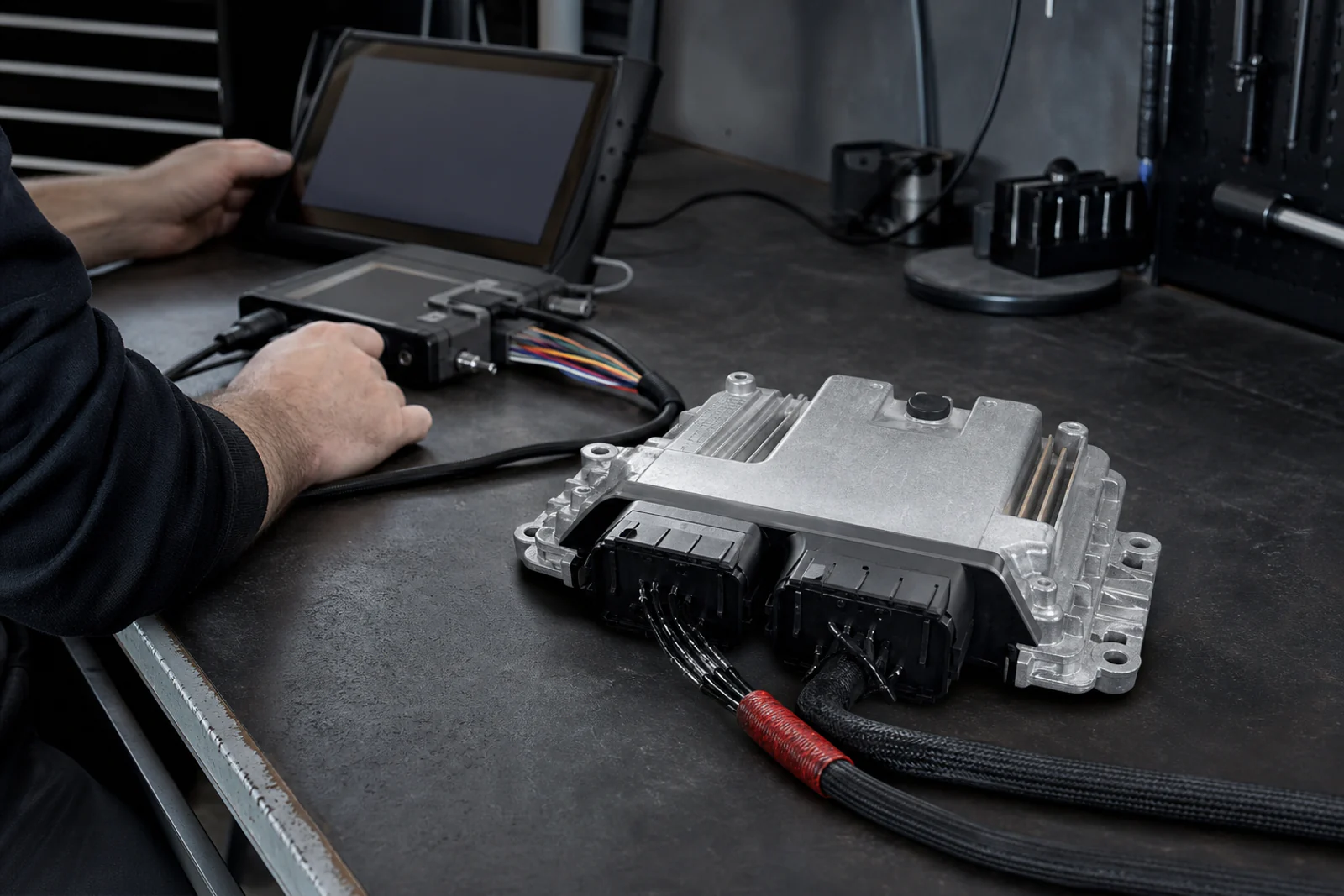
ECU connected to tuning hardware during a custom remap at Navs HID Direct
Original file read and archived before anything is written.
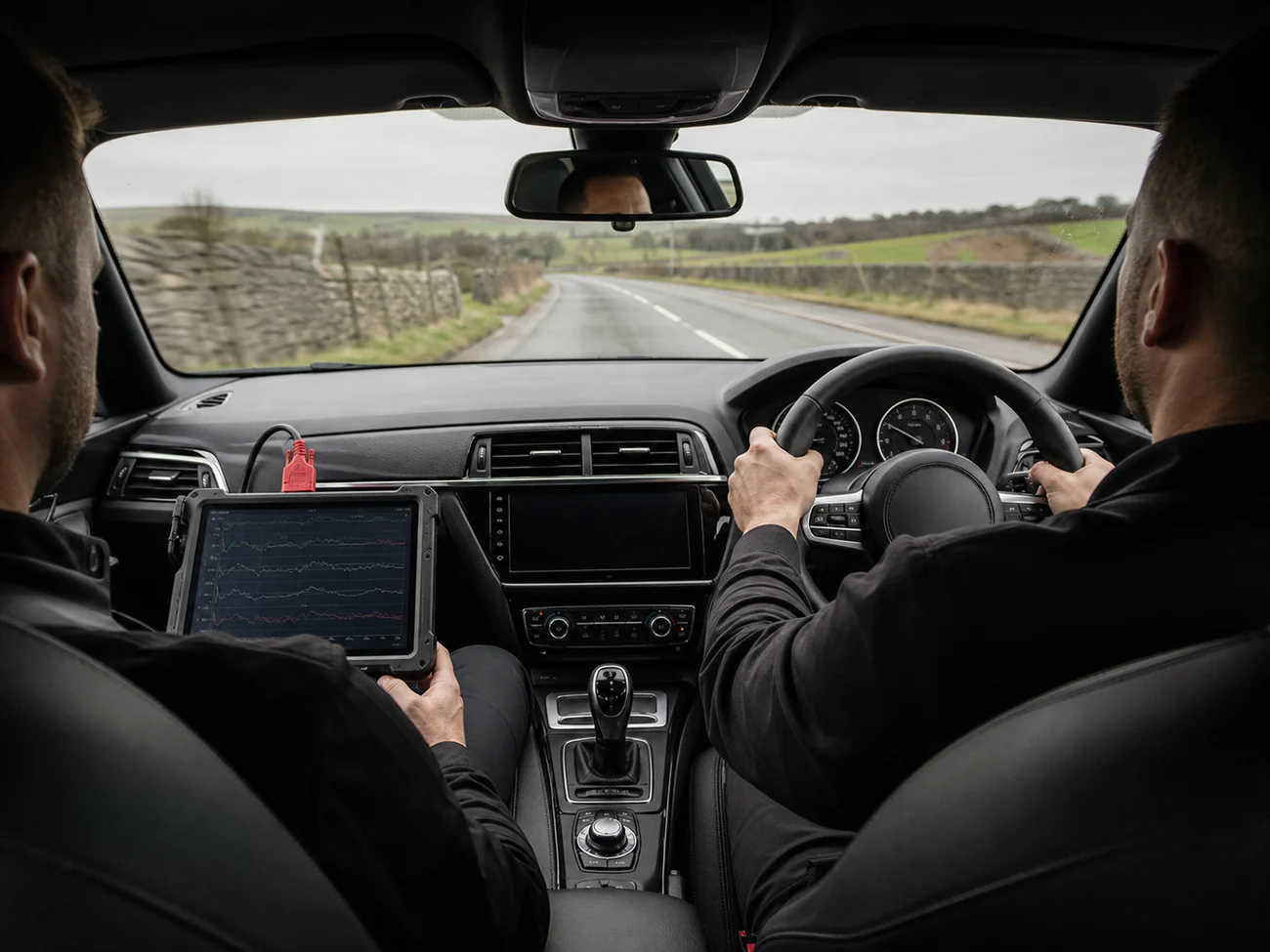
Technician road testing a remapped vehicle while logging live engine data
Validated on the road, under load, in the conditions you actually drive in.

Safety margins

The six numbers we will not ignore

A calibration is only as good as the data it was checked against. These are the parameters logged on every vehicle, and any one of them can stop a change being made.

  • Knock correction

    Detonation is what destroys pistons. Timing is pulled back the moment the data suggests it.

  • Exhaust gas temperature

    The limit that protects your turbocharger and manifold on a diesel.

  • Lambda / AFR

    Confirms fuelling is where the calibration intends it to be, under real load.

  • Boost deviation

    Requested against actual. Divergence means the turbo is being asked for too much.

  • Rail pressure

    Shows whether the injectors and pump can genuinely deliver what is being asked.

  • Intake air temperature

    Heat soak changes everything. A map that only works when cold is not a finished map.

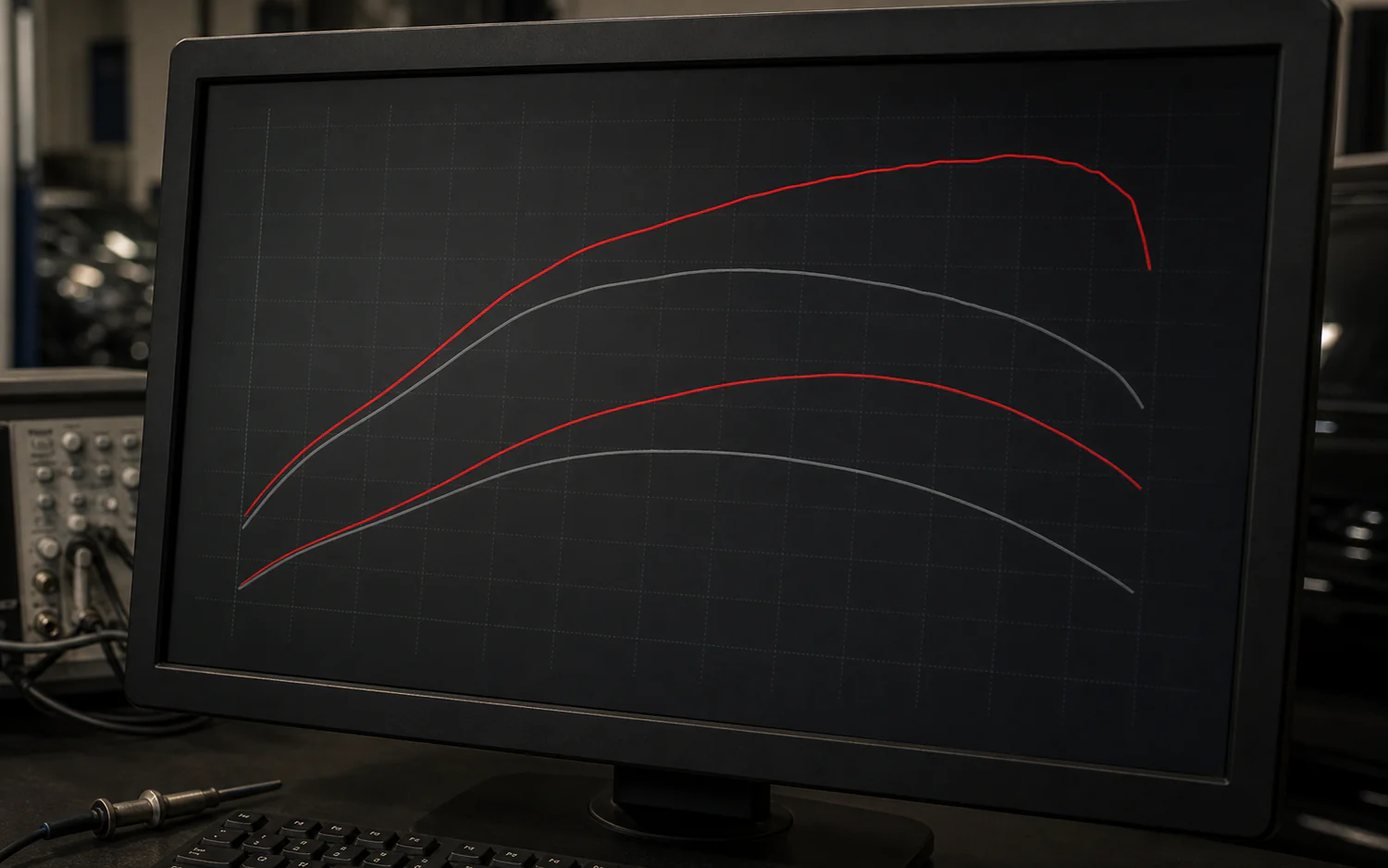
Before and after power and torque curves recorded from a Stage 1 remap
Before and after, from the same vehicle on the same day.

Being straight with you

What a remap will and will not do

On a turbocharged engine, calibration is genuinely transformative, because the factory settings are a compromise across fuel grades, climates and service intervals worldwide. Removing that compromise for a single well-maintained car in Yorkshire is where the gains come from.

On a naturally aspirated engine there is far less on the table, and anyone quoting you thirty percent is selling you something. We will tell you what your specific engine is realistically capable of before you book, even when the honest answer costs us the job.

  • Original file archived indefinitely, free reversion at any time
  • Written specification sheet for your insurer, listing exactly what changed
  • Twelve month warranty on our labour and calibration work
  • Honest assessment before booking, including when to say no

Questions

Remapping questions

Warranty, insurance, safety and economy. The four things worth understanding before anyone writes to your ECU.

All FAQs

Is a remap safe for my engine?

It is when the calibration is written for your vehicle rather than pulled off a shelf. We stay within the safe limits of the standard turbocharger, injectors and clutch, and we monitor knock, exhaust gas temperature, lambda and boost deviation while the car is under load. If the data says the engine will not take a change, we do not make it.

Do I have to tell my insurer?

Yes. A remap is a modification and must be declared. Failing to declare it can invalidate a claim. We provide a written specification sheet describing exactly what was changed so you can pass accurate details to your insurer.

Can the car be put back to standard?

At any time. We archive your original file before any changes are written, and we keep that archive indefinitely. Reverting is a straightforward appointment.

Will it improve my fuel economy?

It can, on diesel and turbocharged petrol engines, because more torque low down means less throttle for the same progress. Economy-focused calibrations are available for high-mileage drivers and vans. If you use the extra performance, expect consumption to rise.

What if my car needs a service first?

We health check every vehicle before writing anything and will tell you if oil, plugs, filters or a fault code should be dealt with first. Tuning a neglected engine is how people end up with problems, so we would rather delay the appointment than proceed.

Book a calibration

Send the registration. We will tell you what your engine can actually take.

You will get a realistic figure for gains on your specific vehicle, a firm price, and an honest answer on whether the work is worth doing at all.